
What if your existing customers could help bring new customers to your Shopify store?
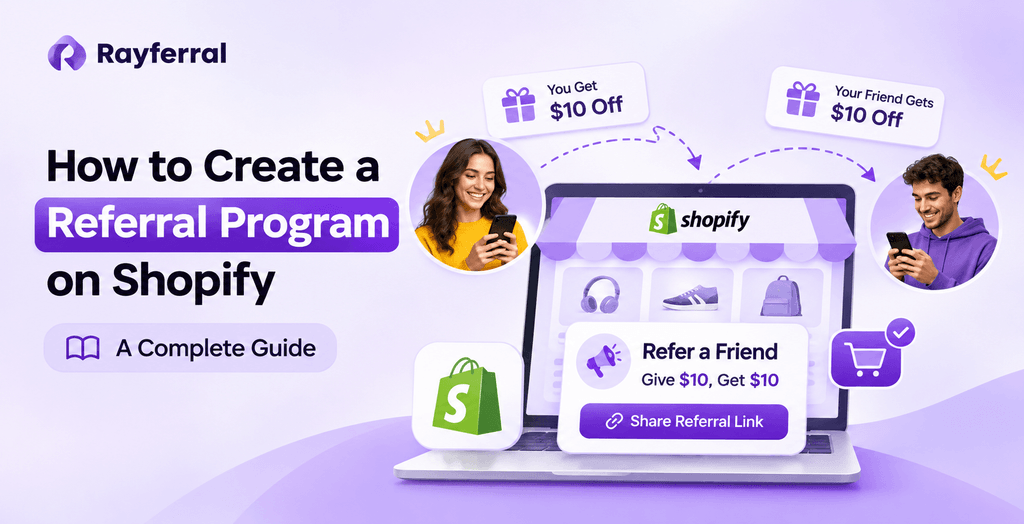
Every day, satisfied customers share their favourite products with friends, family members, and colleagues. They recommend products they trust, talk about their shopping experiences, and introduce others to brands they enjoy. These conversations can influence purchasing decisions in ways that traditional advertisements often struggle to achieve.
This is where referral marketing becomes valuable.
A Shopify referral program gives your existing customers an opportunity to recommend your products and receive rewards when their referrals result in qualifying purchases. Instead of depending entirely on paid advertising, you can turn customer satisfaction into a structured marketing strategy.
Whether you operate a small Shopify store or manage an established eCommerce brand, a referral program can help you attract new shoppers, strengthen customer relationships, and encourage repeat purchases.
But how do you actually create one?
In this guide, we will walk through everything you need to know about Shopify referral programs, including how they work, how to choose rewards, how to set up referral tracking, and how to encourage more customers to participate.
1. What Is a Shopify Referral Program?
A Shopify referral program is a marketing strategy that encourages existing customers to introduce new shoppers to your online store in exchange for incentives.
The idea is straightforward: customers who enjoy your products receive a unique referral link or sharing option. They can share it with people they know, and when someone makes an eligible purchase through their referral, the original customer earns a reward.
You can also offer an incentive to the new customer, making the experience beneficial for both participants.
For example, imagine you operate a Shopify store selling skincare products.
You introduce the following referral offer:
- Existing customer: Get a $10 discount on your next order.
- New customer: Get 10% off your first purchase.
An existing customer shares their referral link with a friend. The friend visits your store, purchases a product using the referral offer, and receives the discount. After the purchase meets your program conditions, the existing customer receives their reward.
Both customers benefit, and your store gains a new customer through a personal recommendation.
Unlike traditional promotions that target a broad audience, referral marketing uses the relationships your customers already have to introduce your brand to potential buyers.
2. How Does a Shopify Referral Program Work?
A referral program usually follows a simple process involving three participants: your business, the existing customer, and the referred customer.
Here is how a typical customer referral journey works.
Step 1: A Customer Joins Your Referral Program
An existing customer discovers your referral program through a website widget, post-purchase popup, or dedicated referral page.
They sign up and receive access to their personal referral link.
Step 2: The Customer Shares Their Referral Link
The customer shares the link with friends, family, or their social media audience.
You can make sharing easier by offering convenient sharing options through messaging applications, email, and social media.
Step 3: A New Customer Visits Your Store
Someone clicks the referral link and visits your Shopify store.
The referral tracking system identifies the referral source and associates the visit with the referring customer, subject to the app’s tracking rules and settings.
Step 4: The New Customer Makes a Purchase
The referred customer explores your products and completes an eligible purchase.
If your program offers a first-purchase discount, the customer can use the applicable referral coupon during checkout.
Step 5: Rewards Are Issued
Once the purchase satisfies the referral conditions, the reward is assigned to the referring customer.
Depending on your reward structure, both customers may receive discount coupons or other incentives.
This process can be managed through a dedicated Shopify referral app, reducing the need for manual tracking and reward management.
3. Why Should You Create a Referral Program for Your Shopify Store?
A referral program is not simply another discount campaign. When designed properly, it can become an additional customer acquisition channel for your business.
Here are some reasons Shopify merchants should consider implementing one.
Reduce Dependence on Paid Advertising
Advertising platforms can help businesses reach new audiences, but acquiring customers through paid campaigns requires an ongoing budget. Referral marketing gives existing customers a reason to introduce your products to people they already know. You still have to account for referral rewards and program costs, but you can tie incentives to qualifying purchases instead of paying simply for impressions or clicks.
Build Trust Through Customer Recommendations
People often seek recommendations before purchasing unfamiliar products. When a friend or family member recommends a product based on personal experience, the recommendation comes with an existing level of trust. A referral program encourages customers to share those experiences and introduces your store to potential buyers through more personal channels.
Encourage Repeat Purchases
Rewards such as discount coupons and store credit can motivate customers to return to your store. For example, a customer who receives a $10 referral coupon may use it on their next purchase rather than allowing it to go unused. This creates an opportunity to connect customer acquisition with customer retention.
Increase Brand Awareness
Every referral creates an opportunity for someone new to discover your business. Customers can introduce your products to their personal networks, social media followers, and communities.
As more people participate, your brand can reach audiences beyond your regular advertising campaigns.
Create a More Engaging Customer Experience
Customers appreciate being recognized and rewarded for supporting a brand. A well-designed referral program gives them an additional way to interact with your business beyond purchasing products. It also makes customers feel that they are participating in your brand’s growth.
4. Different Types of Referral Rewards
Your reward structure plays an important role in determining how attractive your referral program will be. The best incentives depend on your products, profit margins, average order value, and customer purchasing behaviour.
Here are some popular options.
Percentage-Based Discounts
Offer a percentage discount to customers when they successfully refer someone.
For example:
- Referring customer receives 15% off their next order.
- New customer receives 10% off their first purchase.
Percentage discounts work well for stores selling products across different price ranges.
Fixed-Amount Discounts
Give customers a fixed discount for every successful referral.
For example, a customer receives $10 off their next purchase, while their referred friend receives $5 off their first order.
Fixed discounts are straightforward and easy for customers to understand.
Store Credit
Instead of offering immediate discounts, reward customers with store credit that can be redeemed on future purchases. This can encourage customers to continue shopping with your business.
Free Products and Exclusive Rewards
You can also reward customers with free products, complimentary upgrades, exclusive collections, or special offers. These incentives can be particularly attractive to customers who regularly purchase from your store.
Two-Sided Referral Rewards
One of the most effective approaches is to reward both the referring customer and the new customer.
For example:
Give $10, Get $10
- Your existing customer receives $10 off their next purchase.
- Their friend receives $10 off their first purchase.
This creates a clear incentive for both participants and makes the referral offer easier to communicate.
Important: Before launching any reward structure, calculate the total incentive cost and make sure it aligns with your product margins. Clearly explain minimum order values, eligibility, expiration dates, and other conditions.
5. How to Create a Referral Program on Shopify
Now let’s look at the practical steps involved in launching a referral program for your Shopify store.
Step 1: Define Your Referral Program Goals
Before choosing an app or setting up rewards, decide what you want to accomplish.
Your objectives might include:
- Acquiring new customers through existing shoppers.
- Increasing repeat purchases.
- Encouraging customers to share your products.
- Improving customer engagement.
- Building stronger brand awareness.
- Reducing reliance on paid advertising.
Having clear objectives will help you choose the right referral structure.
For example, if your primary goal is to attract new customers, a two-sided referral program can be a good starting point.
If your objective is to encourage existing customers to purchase more frequently, future-order discounts or store credit may be more suitable.
Step 2: Choose a Shopify Referral App
Shopify merchants can use dedicated referral applications to create and manage customer referral programs.
A referral app helps automate activities that would otherwise require considerable manual effort.
When comparing different Shopify referral apps, look for the following capabilities:
- Unique referral links for participants.
- Referral tracking and attribution.
- Customizable referral widgets.
- Post-purchase referral invitations.
- Flexible reward structures.
- Two-sided referral incentives.
- Customer-friendly signup experiences.
- Reporting and performance monitoring.
Also consider how easily the app integrates with your Shopify store and whether its customization options match your brand.
Choosing the right application from the beginning makes it easier to manage your referral program as your customer base grows.
Step 3: Install and Connect the Referral App
Once you have selected your preferred application, install it on your Shopify store.
The general process is:
- Log in to your Shopify admin.
- Open the Shopify App Store.
- Search for your chosen referral application.
- Open the app listing and select the installation option.
- Review and approve the requested permissions.
- Open the application dashboard and complete the initial setup.
Follow the application’s onboarding instructions to connect the referral system with your store.
Step 4: Configure Your Referral Rewards
Next, decide what customers will receive when they successfully refer someone.
Start with a reward structure that is simple to understand.
For example:
Refer a Friend and Both Get 10% Off
- Existing customer shares a referral link.
- New customer receives a 10% discount.
- Existing customer receives a 10% discount after an eligible purchase.
You can experiment with different reward values to find an incentive that motivates participation without reducing your profit margins excessively.
Consider defining the following conditions:
- Is the offer available only to first-time customers?
- Is there a minimum purchase amount?
- Can referral rewards be combined with other discount codes?
- How long are referral coupons valid?
- When does the referring customer receive their reward?
- What happens when an order is cancelled or refunded?
Clear conditions make your referral program easier to manage.
Step 5: Create a Referral Page or Widget
Customers should be able to discover and understand your referral program without searching through your website.
A dedicated referral page or customizable widget can make the program more accessible.
Your referral experience should communicate three important things:
What customers need to do: Explain how to join and share their referral links.
What they can earn: Clearly display the rewards available to both the existing customer and their friend.
How they receive their rewards: Explain when rewards become available and how they can be redeemed.
For example, your referral page could display:
Love Our Products? Share the Experience!
Invite your friends to discover our products. They get a special discount on their first order, and you receive a reward when they make a qualifying purchase.
Invite Friends & Earn Rewards
Keep the design consistent with your store’s branding and make the invitation action easy to find.
Step 6: Set Up Referral Tracking
Accurate tracking is essential for a successful referral program.
Every participant should have a way to share their referral invitation, and your referral application should identify which customer generated each eligible referral.
Configure the tracking rules according to your business requirements.
Pay attention to:
- Referral link attribution.
- Referral coupon usage.
- First-time customer eligibility.
- Duplicate or self-referrals.
- Cancelled and refunded orders.
- Reward qualification conditions.
Test the entire customer journey before launching the program publicly.
Create a test referral, visit your store through the referral link, and check whether the referral is correctly attributed when an eligible order is placed.
Step 7: Test and Launch Your Program
Before announcing your referral program, make sure every part of the experience works correctly.
Check that:
- Customers can access the referral program.
- Signup works as expected.
- Referral links are generated correctly.
- Sharing options work.
- Referral visits are tracked.
- Discount codes apply according to your rules.
- Rewards are issued after the required conditions are met.
- Customers can understand their referral status.
Once everything is working, launch the program and introduce it to your existing customers.
6. How to Promote Your Shopify Referral Program
Even a well-designed referral program needs visibility. Customers cannot participate if they do not know that your store offers referral rewards.
Here are some practical ways to increase participation.
Send an Email Announcement
Your existing customer database is a good place to start. Send an email explaining the new referral program, the rewards available, and how customers can participate. Keep the message simple and include a clear invitation to join.
Use Post-Purchase Popups
A customer who has just completed a purchase may be interested in sharing their experience with others. A post-purchase referral popup can introduce your program at an appropriate point in the shopping journey.
For example:
“Thanks for shopping with us! Know someone who would love our products? Invite them and earn rewards.”
Add a Referral Link to Your Website
Make your referral program easy to find.
You can add a referral link to:
- Website navigation.
- Footer menus.
- Customer account areas.
- Homepage promotional sections.
- Order confirmation communications.
Promote Through Social Media
Use your social media channels to introduce the program and explain how customers can participate. Create simple posts, short videos, and promotional graphics highlighting the benefits of referring friends.
Encourage Customer Participation
Consider introducing special campaigns during seasonal promotions, product launches, and other important shopping periods.
For example, you could offer an additional reward during a holiday campaign to encourage more customers to share your products.
7. Best Practices for Running a Successful Referral Program
Launching your referral program is only the first step. Its long-term performance depends on how effectively you manage and improve it.
Keep these practices in mind.
Keep the Referral Process Simple
Customers should not have to complete a complicated registration process or follow too many steps to share a referral. Make it easy to access referral links, understand the rewards, and invite friends.
Offer Rewards That Customers Actually Want
Not every reward works for every business. A discount may work well for a fashion store, while free product upgrades may be more attractive for a beauty or subscription-based business.
Experiment with different incentives and monitor participation.
Make Your Referral Program Visible
Do not hide your referral program in an obscure section of your website. Use website widgets, post-purchase invitations, email campaigns, and social media to introduce it to customers.
Prevent Referral Fraud
Establish clear rules to discourage customers from referring themselves or creating duplicate accounts to collect rewards.
You should also define how cancelled, refunded, and fraudulent orders are handled.
Review Performance Regularly
Monitor referral activity and identify opportunities to improve your program. If customers are sharing links but few referred visitors make purchases, consider improving your landing page, product messaging, or referral offer.
If participation is low, review how prominently you promote the program and whether your rewards are attractive enough.
8. Common Referral Program Mistakes to Avoid
A referral program can underperform when important details are overlooked.
Here are some common mistakes Shopify merchants should avoid.
Offering rewards that are too complicated: Customers should understand the referral offer immediately. Avoid confusing reward calculations and unnecessary conditions.
Ignoring the referred customer’s experience: Make sure new customers can easily understand their discount and complete their purchase.
Not testing referral tracking: Incorrect attribution can lead to disputes and incorrect reward distribution. Always test the referral journey before launch.
Choosing unsustainable incentives: Rewards should encourage participation without making every referred order unprofitable.
Failing to promote the program: Do not assume customers will automatically discover your referral program. Make it part of your customer communication strategy.
Not reviewing results: Referral marketing should be continuously improved based on actual performance rather than assumptions.
9. How Rayferral Helps Shopify Stores Grow Through Referrals
Setting up a referral program is easier when you have the right tools to manage the entire experience.
Rayferral helps Shopify merchants turn existing customers into brand advocates through a structured referral marketing solution.
Instead of manually managing referral invitations, customer participation, and rewards, merchants can use Rayferral to create a more organized referral experience.
Here are some of the capabilities that support your referral strategy.
Customizable Referral Widgets
Make your referral program accessible directly from your store.
With customizable widgets, you can introduce referral opportunities while maintaining a consistent experience with your brand.
Post-Purchase Referral Popups
Give customers an opportunity to share your products after completing a purchase.
Post-purchase referral invitations help introduce the program when customers are already interacting with your brand.
Simplified Customer Signup
Make it easier for customers to join your referral program and start sharing their referral links.
A straightforward signup experience can reduce unnecessary friction and encourage participation.
Two-Sided Coupon Rewards
Reward both the existing customer and the referred shopper.
Rayferral supports referral campaigns where the referring customer and their friend can receive discount coupons for their next purchases, helping create a mutually beneficial referral experience.
Referral Tracking Across Social and Mobile
Customers share recommendations through different channels and devices.
Rayferral provides referral tracking designed to support sharing across social and mobile experiences, helping merchants manage their referral activity.
One Platform for Referral and Affiliate Growth
Your marketing requirements may expand as your store grows.
Beyond customer referrals, Rayferral also brings affiliate and multi-tier program capabilities into one platform.
This gives merchants the flexibility to explore customer referrals, creator partnerships, and more structured partner programs as their business develops.
Whether you are launching your first customer referral campaign or looking to build a broader partner-led growth strategy, Rayferral provides tools to help manage these programs.
Ready to turn happy customers into your next source of growth?
Explore Rayferral and discover a smarter way to manage referral marketing for your Shopify store.
Conclusion
A Shopify referral program gives your existing customers a meaningful reason to introduce your brand to new shoppers.
By offering attractive rewards, creating an easy sharing experience, and tracking referrals accurately, you can build a marketing channel that supports customer acquisition, engagement, and repeat purchases.
The key is to keep the program simple, choose incentives that make financial sense, and continuously improve the experience based on customer behaviour.
You do not need an unnecessarily complicated referral strategy to get started. A simple give-and-get offer can be a great first step.
With a dedicated solution like Rayferral, you can bring referral widgets, post-purchase invitations, customer signup, and two-sided coupon rewards together to manage your referral program more effectively.